Lighting can completely transform how your home looks and feels. From creating a cozy living room to brightening your kitchen for cooking, lighting plays a major role in both design and function. Many homeowners overlook this essential element, but choosing the perfect lighting for every room is easier than you think.
In this home lighting guide, you’ll learn how to use ambient, task, and accent lighting to create beautifully illuminated spaces — room by room.
Understanding the Three Types of Lighting
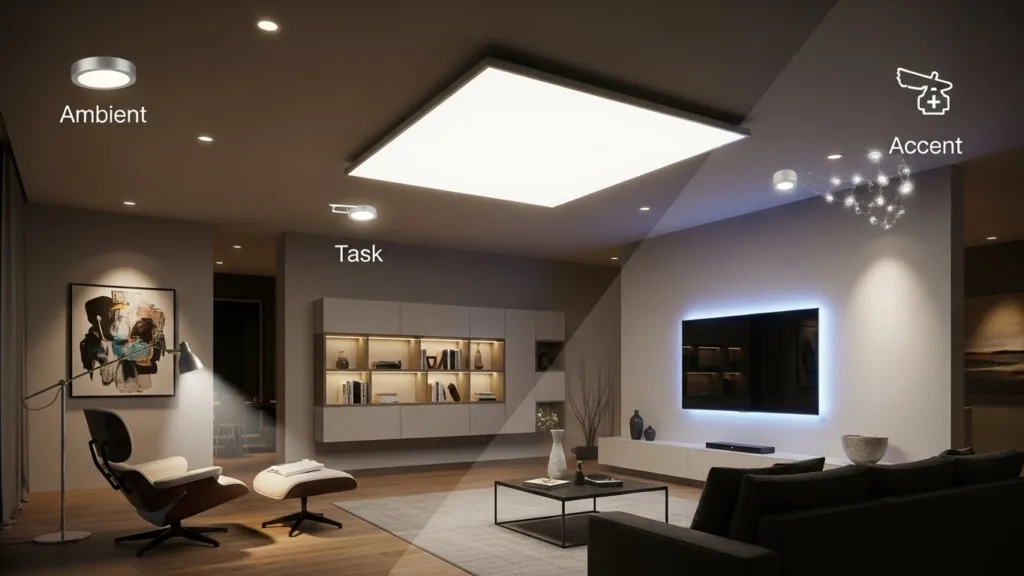
To create a balanced lighting design, you need to understand the three fundamental lighting types used in modern interior lighting design.
1. Ambient Lighting (General Lighting)
Ambient lighting provides overall room illumination and sets the tone for the entire space.
Examples: recessed lights, chandeliers, ceiling lights, LED panels.
2. Task Lighting
Task lighting is designed for specific activities like reading, cooking, and grooming.
Examples: desk lamps, vanity lights, under-cabinet lights, bedside lamps.
3. Accent Lighting
Accent lighting adds visual interest and highlights decor, artwork, or architectural details.
Examples: wall sconces, picture lights, LED strip lighting, spotlights.
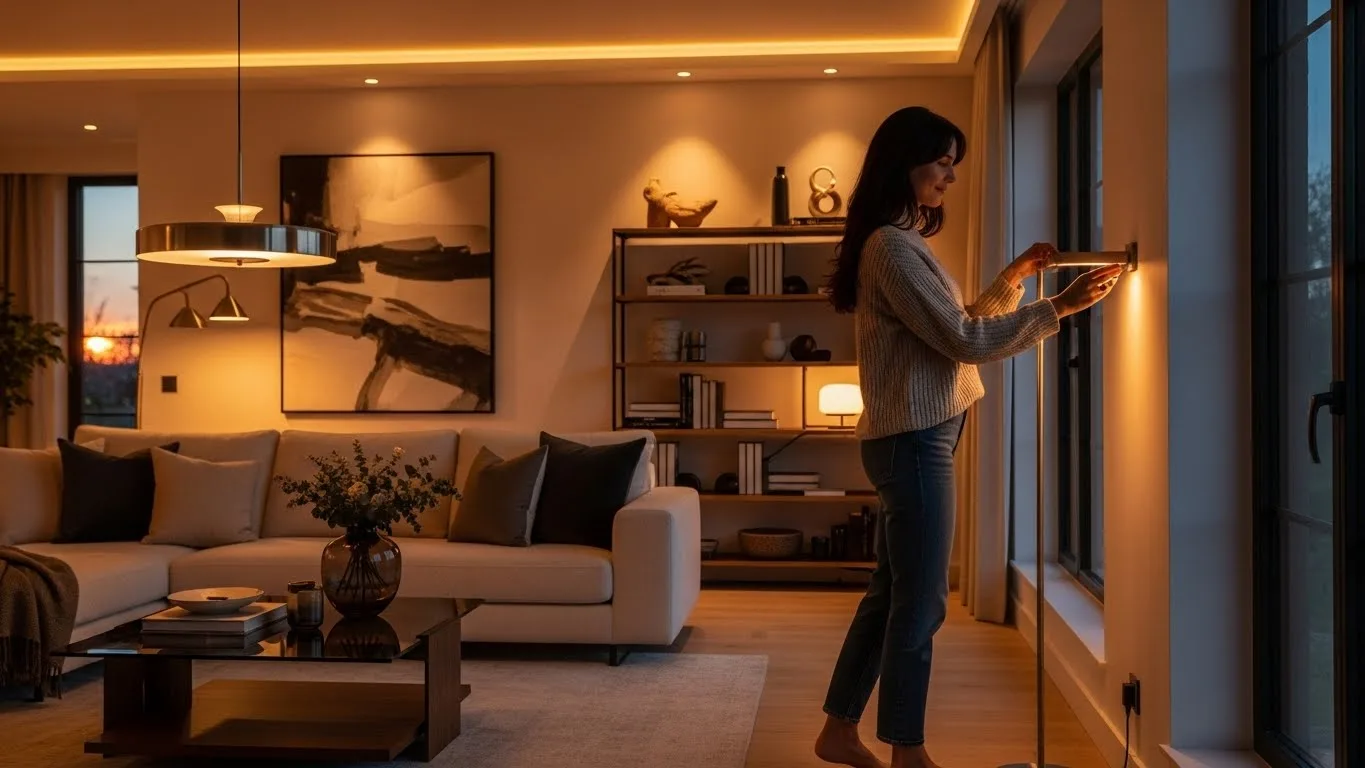
Layering these three lighting types is the secret to perfect lighting for every room.
Room-by-Room Lighting Guide
1. Living Room Lighting Ideas
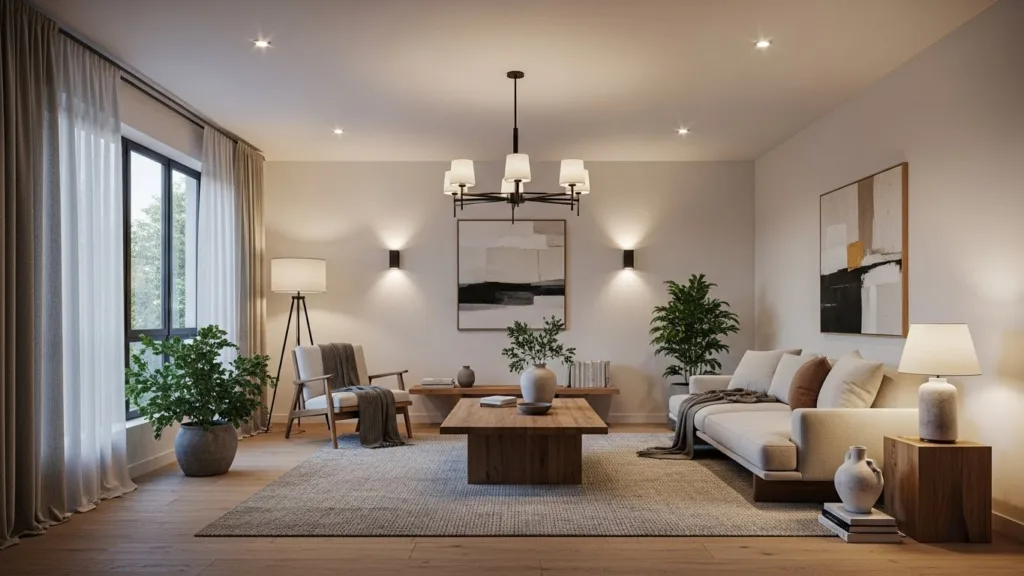
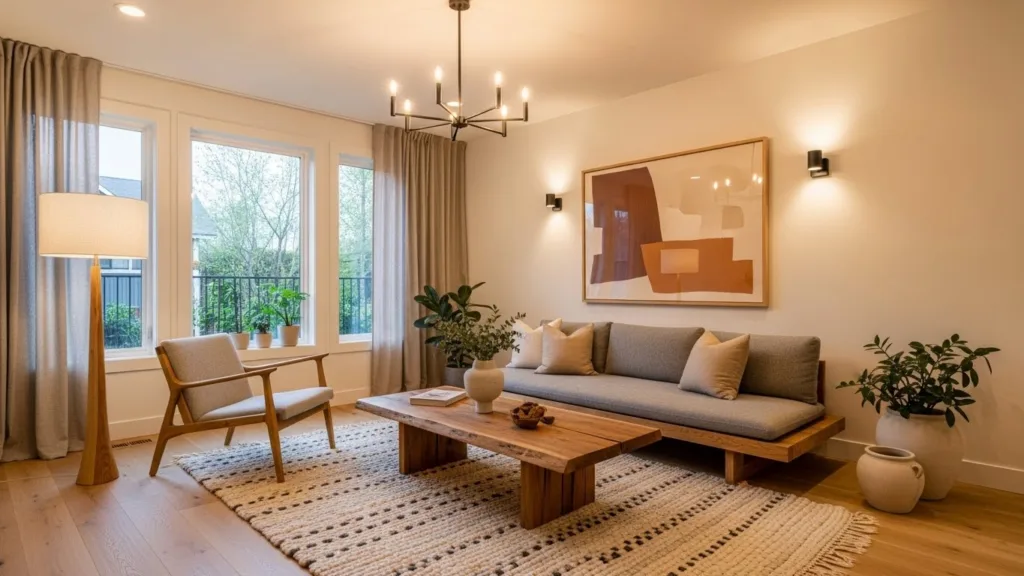
Your living room needs flexible lighting because it’s used for relaxing, entertaining, reading, and watching TV.
Best Living Room Lighting Options
- Ambient: chandeliers, pendants, or recessed lighting
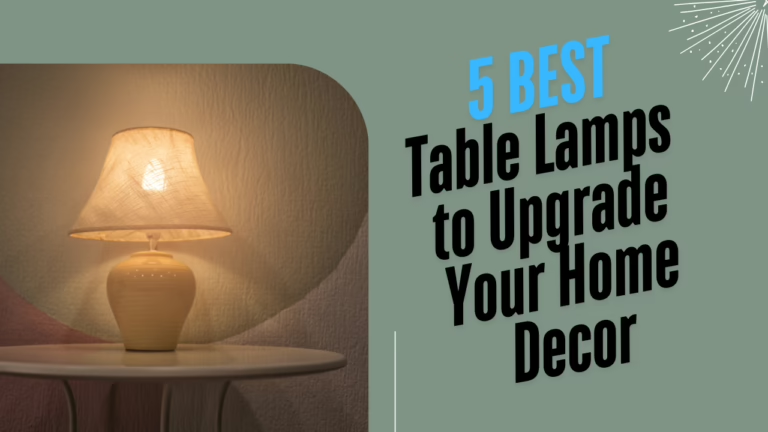
- Task: floor lamps, table lamps, reading lamps
- Accent: wall sconces, backlit TV lighting, picture lights
Lighting Tips for Living Rooms
- Use warm white bulbs (2700–3000K).
- Install dimmers to control ambiance.
- Spread light sources around the room instead of relying on one overhead light.
2. Kitchen Lighting Tips
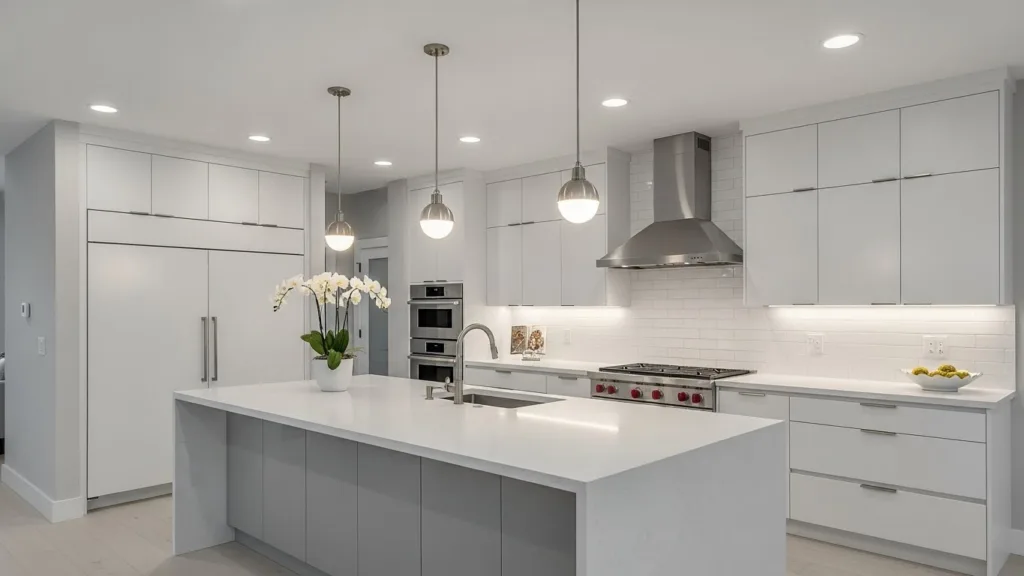
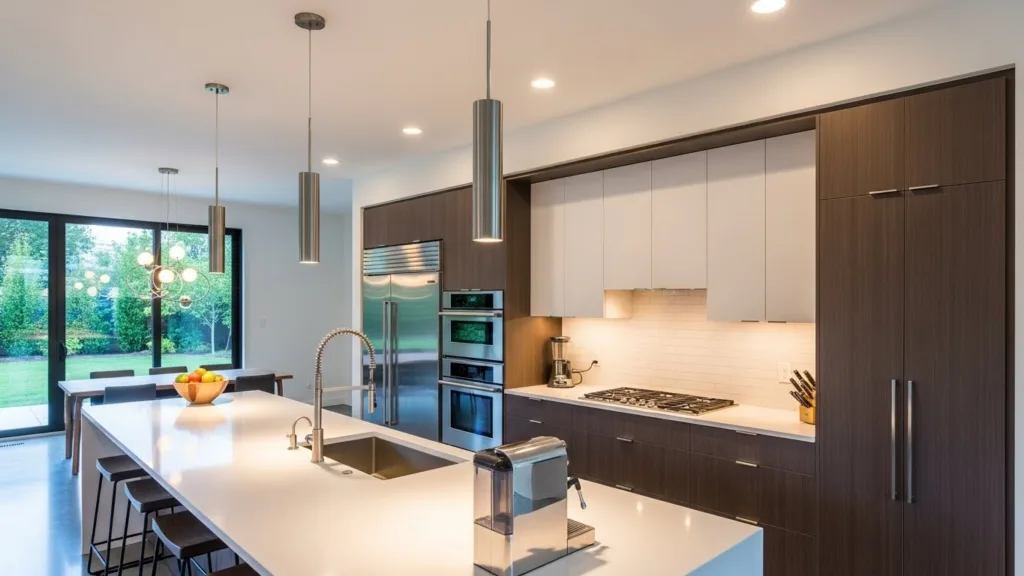
The kitchen requires practical, bright lighting to support cooking and food prep.
Best Kitchen Lighting Options
- Ambient: recessed lighting or LED ceiling panels
- Task: under-cabinet lighting, pendant lights over islands
- Accent: toe-kick LED strips or cabinet interior lighting
Lighting Tips for Kitchens
- Choose neutral or cool white bulbs (3000–4000K).
- Illuminate workspaces to reduce shadows.
- Hang pendants 30–36 inches above the kitchen island.
3. Bedroom Lighting Ideas
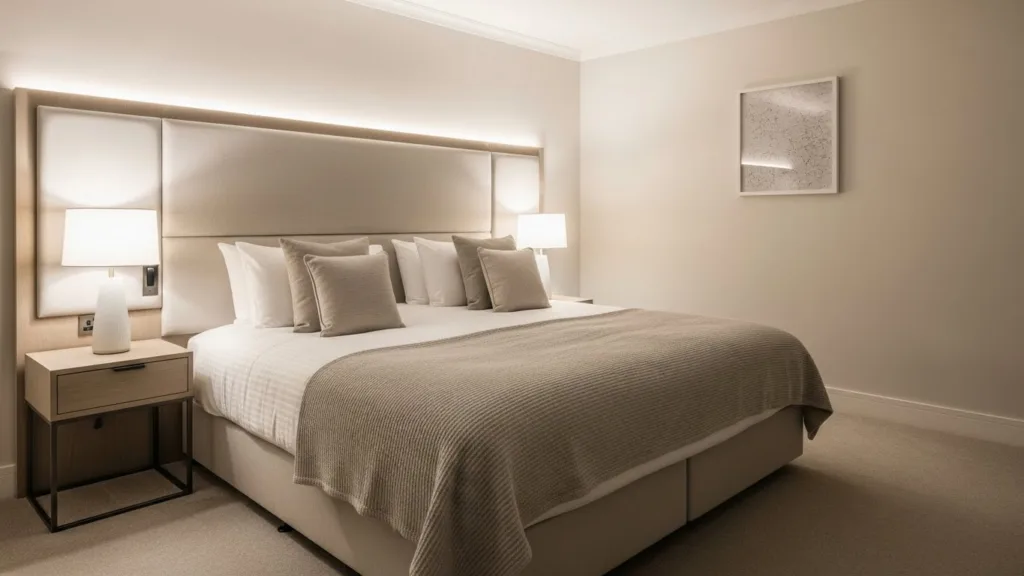
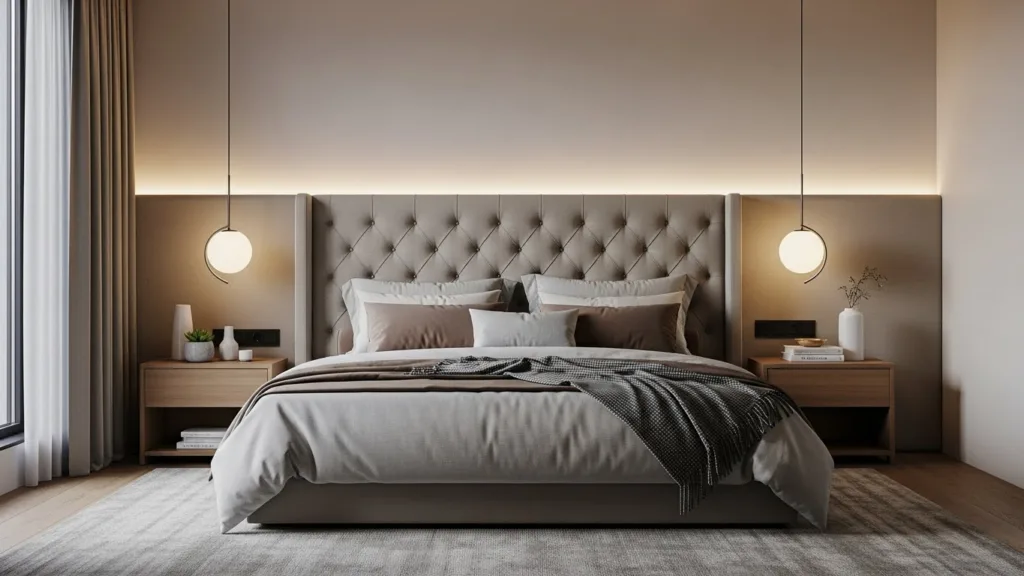
Bedrooms should feel cozy, calm, and inviting — lighting plays a huge role in achieving this.
Best Bedroom Lighting Options
- Ambient: pendants, flush mounts, or soft diffused lighting
- Task: bedside lamps, wall-mounted reading lights
- Accent: LED strips behind headboards or soft wall sconces
Lighting Tips for Bedrooms
- Choose warm white (around 2700K).
- Use smart bulbs for adjustable brightness.
- Avoid harsh overhead lighting before bedtime.
4. Bathroom Lighting Guide
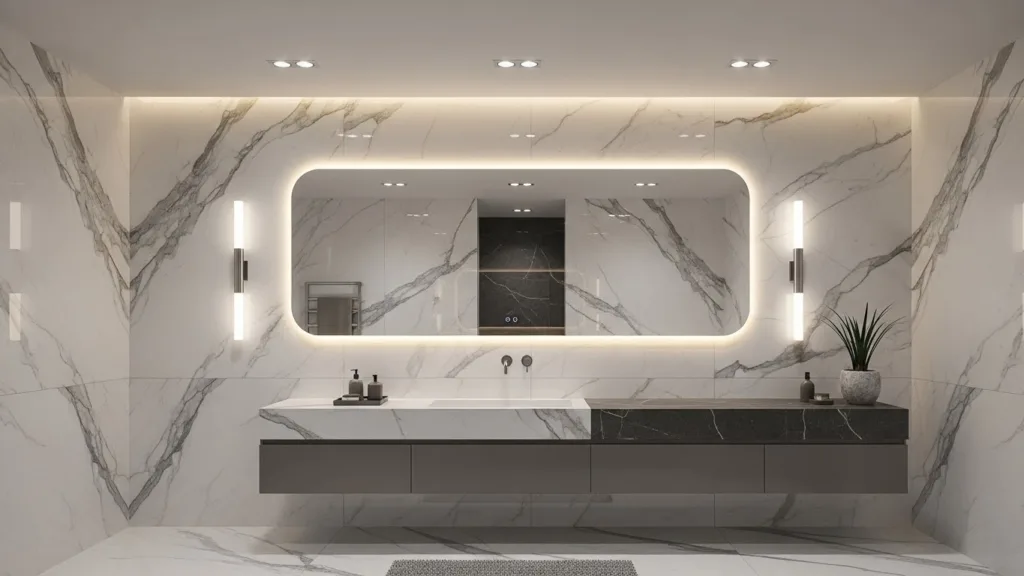
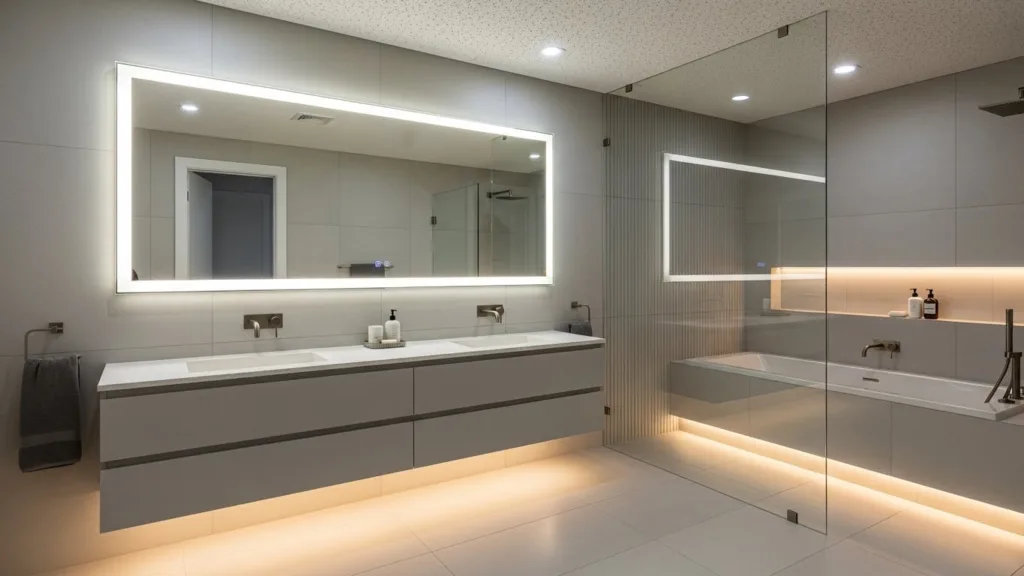
Bathroom lighting must be bright, safe, and shadow-free — especially around mirrors.
Best Bathroom Lighting Options
- Ambient: waterproof recessed lighting or ceiling fixtures
- Task: vertical face-level lights or backlit mirrors
- Accent: LED strips under vanities or in niches
Lighting Tips for Bathrooms
- Use 3000–3500K for natural skin tones.
- Avoid lights directly above the mirror.
- Ensure fixtures are damp-rated or wet-rated.
5. Home Office Lighting Ideas
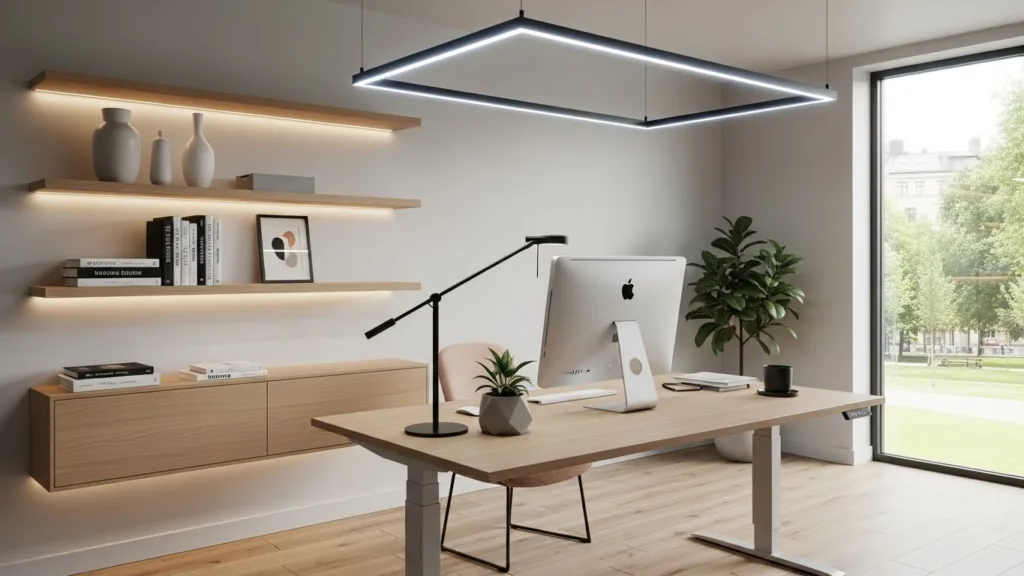
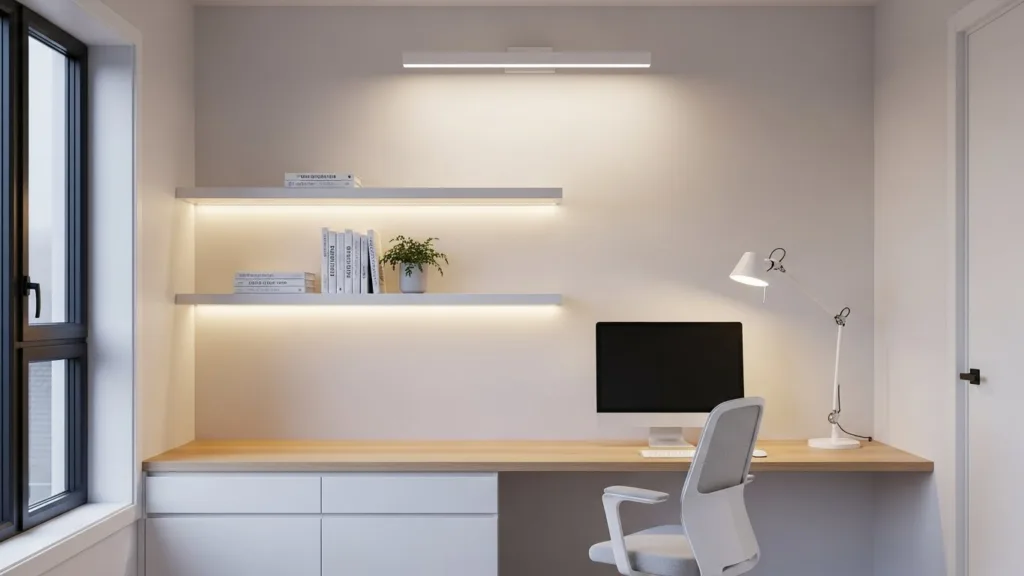
Productivity depends heavily on proper workspace lighting.
Best Home Office Lighting Options
- Ambient: LED overhead lighting
- Task: bright, adjustable desk lamps
- Accent: soft wall lighting or bookshelf lighting
Lighting Tips for Offices
- Choose 3500–4000K bulbs for focus.
- Position desk lamps to avoid casting shadows.
- Use indirect lighting to reduce screen glare.
6. Dining Room Lighting Ideas
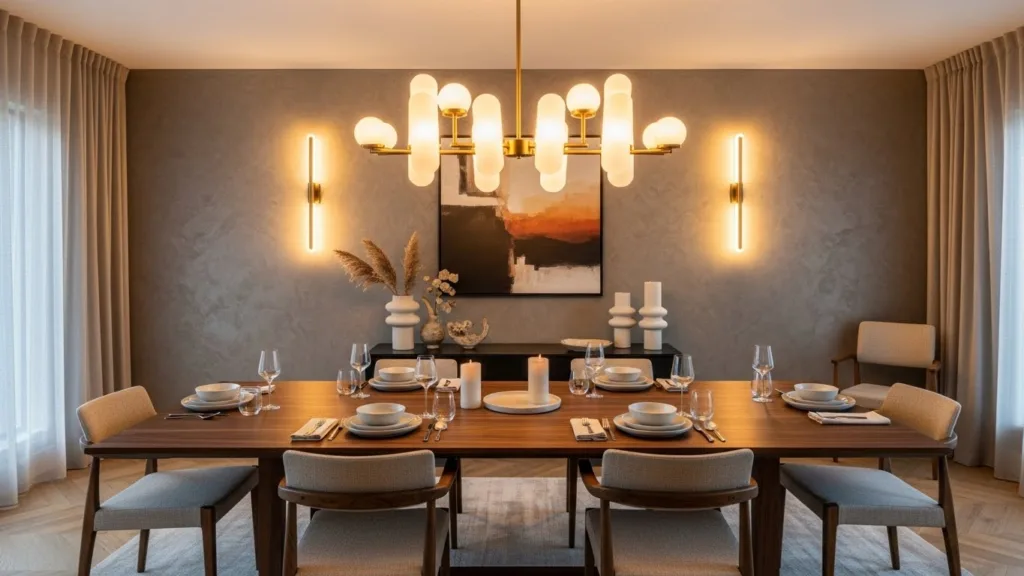

Dining room lighting should feel warm and intimate.
Best Dining Room Lighting Options
- Ambient: chandeliers or pendant clusters
- Accent: sideboard lamps, candles, wall sconces
Lighting Tips for Dining Rooms
- Hang your chandelier 30–34 inches above the table.
- Use warm 2700K bulbs.
- Install dimmers for mood lighting.
How to Choose the Right Light Bulbs
Color Temperature (Kelvin Scale)
- 2700–3000K: warm and cozy (living room, bedroom)
- 3000–3500K: balanced white (bathrooms, dining rooms)
- 3500–4000K: bright and energizing (kitchen, office)
Lumens (Brightness Guide)
- Living Room: 2,000–4,000 lumens
- Kitchen: 4,000–8,000 lumens
- Bedroom: 1,500–3,000 lumens
- Bathroom: 4,000–6,000 lumens
- Office: 3,000–6,000 lumens
Best Types of Bulbs
- LED: most efficient and long-lasting
- Halogen: bright but hot
- Incandescent: warm but outdated
Final Lighting Design Tips
- Layer ambient, task, and accent lighting for balance.
- Use dimmers for flexibility.
- Mix different types of lamps and fixtures.
- Match bulb color temperature to the purpose of each room.
- Consider smart lighting for convenience and ambiance control.